Thursday, June 23, 2016

"Amateurs talk about tactics, but professionals study logistics."  It makes you wonder what could be more valuable than disrupting communications (and recruiting)?
US Military's Cyber Force Reluctant to Cut Internet in Syria
The US military is wary of cutting Internet connections to Islamic State strongholds such as Raqa in Syria, even though the Pentagon is waging cyber-war against the jihadists, officials said Wednesday.
…   CYBERCOM deputy leader Lieutenant General Kevin McLaughlin said the Pentagon has gained important experience fighting the IS group online.
"It's given us the opportunity to learn and mature and kind of plow back in lessons learned in a real circumstance that it might have taken us several years to learn," McLaughlin told lawmakers.


For my Computer Security students.
Goodbye, Password. Banks Opt to Scan Fingers and Faces Instead.
…   Millions of customers at Bank of America, JPMorgan Chase and Wells Fargo routinely use fingerprints to log into their bank accounts through their mobile phones.  This feature, which some of the largest banks have introduced in the last few months, is enabling a huge share of American banking customers to verify their identities with biometrics.  And millions more are expected to opt in as more phones incorporate fingerprint scans.
Other uses of biometrics are also coming online.  Wells Fargo lets some customers scan their eyes with their mobile phones to log into corporate accounts and wire millions of dollars.  Citigroup can help verify 800,000 of its credit card customers by their voices.  USAA, which provides insurance and banking services to members of the military and their families, identifies some of its customers through their facial contours.
Some of the moves reflect concern that so many hundreds of millions of email addresses, phone numbers, Social Security numbers and other personal identifiers have fallen into the hands of criminals, rendering those identifiers increasingly ineffective at protecting accounts.  And while thieves could eventually find ways to steal biometric data, banks are convinced they offer more protection.

(Related). Part of what banks are up against.
GozNym Trojan Targets Major US Banks
The GozNym banking Trojan has been observed targeting the customers of some of the largest financial institutions in the United States, IBM Security warned on Wednesday.
…   In a redirection attack, the malware hijacks the victim’s browsing session and takes them to a fake website that looks exactly like the legitimate site.  On these phishing sites, victims are instructed to provide personal and financial information that cybercriminals can use to conduct fraud.
In GozNym’s case, the redirection attacks are designed to trick both users and security researchers.  The fake bank webpages are made to look like they are hosted on the targeted organization’s genuine URL and they even display the SSL certificate in the browser’s address bar.


Even as an avid science fiction fan, this seems farfetched and illogical.
Robots May Pay Taxes Under European Proposals
Robots in Europe may soon be given legal rights and considered “electronic persons,” following a draft report from the European Parliament that aims to address the rise of automated workers.
Under the plans, bosses would be required to pay social security on their robot workers’ behalf, as well as adhere to new taxation rules and legal liability frameworks.  
…   Speculation surrounding how robots may evolve into advanced artificial intelligence machines in the future is also included in the report, which it warns may have severe consequences for humanity.
“Ultimately, there is a possibility that within the space of some decades artificial intelligence might surpass human intellectual capacity [I’d say that has already happened in at least one case…  Bob] 
The draft report.  [Note: This is a “.do” file.  Change the extension to “.PDF” to open it.  Bob]   


Misusing technology for fun and profit?
The Perils of Using Technology to Solve Other People's Problems
I found Shane Snow’s essay on prison reform — “How Soylent and Oculus Could Fix the Prison System” — through hate-linking.
Friends of mine hated the piece so much that normally-articulate people were at a loss for words.
…   In Snow’s essay about prison reform, he identifies violence, and particularly prison rape, as the key problem to be solved, and offers a remedy that he believes will lead to cost savings for taxpayers as well: all prisoners should be incarcerated in solitary confinement, fed only Soylent meal replacement drink through slots in the wall, and all interpersonal interaction and rehabilitative services will be provided in Second Life using the Oculus Rift virtual reality system.


Blockchain, my students would do well to learn all about it.
Blockchain Payments Company Raises $60 Million for Push Into China
Circle Internet Financial Ltd., maker of an app that lets people send money to each other via bitcoin’s blockchain—the Internet network underlying the digital currency—says it is heading to China.
…   Circle has already secured licenses in the U.S. and U.K. to swap dollars, pounds, euros and bitcoins via the Blockchain.


There must be an App to help shareholders dig out information like this.  If not, can we create one? 
How Bad Management Led to American Express' Costco Disaster
On Feb. 15, 2015, American Express CEO Ken Chenault announced that the company was walking away from its co-branded credit card partnership with Costco.  The market responded immediately, sending the stock down 6%.  This month, as Costco completes its transition to Visa, American Express' stock has continued its downward spiral.  Amex stock today is down over 21% since the announcement.
Blame for this fiasco is squarely on the shoulders of American Express management.  The company knowingly created large customer concentrations, ignored the risks of this overreliance, and ultimately erased over $40 billion in shareholder value as key customers walked away from the company over the last 18 months.
When American Express first disclosed the end of its Costco partnership last year, management told shareholders for the first time that 10% of the 112 million American Express cards in circulation were co-branded with Costco.  For a company of American Express' size and sophistication, that is a shocking concentration to have in any one customer.


Perspective.
Uber Data And Leaked Docs Provide A Look At How Much Uber Drivers Make
Uber says that its drivers are as much its customers as its passengers are, and that its ride-hail platform is a path to personal freedom and financial independence.  In 2013, the company told the Wall Street Journal that the “typical” Uber driver takes in more than $100,000 in annual gross fares.  (Uber now disputes this characterization.)
More recently, Uber chief adviser and board member David Plouffe has touted the ride-hail platform as a pathway to a modest, more attainable American dream.  But according to leaked internal price modeling data, and Uber’s own calculations provided to BuzzFeed News in response to that leak, drivers in some markets don’t take home much more than service workers at major chains like Walmart when it comes to net pay.
…   Based on these calculations, it’s possible to estimate that Uber drivers in late 2015 earned approximately $13.17 per hour after expenses in the Denver market (which includes all of Colorado), $10.75 per hour after expenses in the Houston area, and $8.77 per hour after expenses in the Detroit market, less than any earnings figure previously released by the company.


Perspective.
Amazon leapfrogs to third biggest video streamer by traffic
…   Amazon Video accounted for 4.3 percent of downstream internet traffic during peak evening viewing hours in North America, according to network equipment maker Sandvine in its twice-yearly Global Internet Phenomena Report Wednesday.
That's still far behind the 35.2 percent of traffic that Netflix gobbles up, and the 17.5 percent commanded by YouTube.  But Amazon's No. 3 ranking is a leap from eighth place a year ago.


This too seems to be a management error but it raises the question: Are chargers really cheap enough to add to disposable packaging?  What is next?  Wheaties chargers?
KFC India Debuts Takeout Box That Doubles As A Greasy, Craptastic Smartphone Charger
…   KFC India has debuted a limited edition version of its 5-in-1 combo, which comes in what’s called a Watt a Box.  Besides the greasy chicken and sides that you’d usually find inside your meal box, there’s also a 6100 mAh power bank that can be used to recharged your Android smartphone or iPhone (both microUSB and Lightning cables are included).


For my geeky students?
Want to develop an app but have no expertise? Google now has a course for you
…   The company on Wednesday launched an app-development course with online university Udacity, aimed specifically at the building of apps for its Android operating system.  The difference between this and other Google-approved programs is that this one is aimed at people with no previous development experience.
…   The course outline says that it takes 165 hours to complete -- that's around 21 days of full-time study (for 8 hours per day).  It also adds that the "base salary" of an Android developer falls between $52,400 and $136,000 in the US.

(Related).  Perhaps we could create an App to run these Apps?
13 Ways to Earn Extra Money With Your Smartphone
Are Money-Making Apps Worth It?
The definition of “worth it” depends on what you’re expecting. For a college student or a stay-at-home parent, these apps may be the difference between living like a pauper or a king.
Here are three things to keep in mind:
1.      It’s pocket change at best.  Even if you sink in full-time hours, you won’t be earning a full-time income.  These apps can be used to fund hobbies or help you get out of debt, but that’s about it.
2.      Time-value is low.  Are you willing to spend 10 hours on your phone to earn $50?  For some people, an hour of leisure is worth more than that, even if the cash is low-effort.  Figure out how much one hour is worth to you before diving in.
3.      Payout thresholds.  Most apps require you to earn a certain amount of dollars before you can request a payout — and these thresholds can be as high as $50 or $100 sometimes.  That’s a big commitment, and many don’t make it that far.
If you’re still interested, great!  Here are some of the better ones we’ve found.  Even if you don’t like all of them, we’re sure you’ll find at least one or two that intrigue you.

Wednesday, June 22, 2016

Interesting on several levels.  Look at how politicians (not just the Clintons) deflect this and compare it to the really bad job Sony did when faced with a similar breach and disclosure.
Clinton Foundation Said to Be Breached by Russian Hackers
The Bill, Hillary and Chelsea Clinton Foundation was among the organizations breached by suspected Russian hackers in a dragnet of the U.S. political apparatus ahead of the November election, according to three people familiar with the matter.
The attacks on the foundation’s network, as well as those of the Democratic Party and Hillary Clinton’s presidential campaign, compound concerns about her digital security even as the FBI continues to investigate her use of a personal e-mail server while she was secretary of state.
Clinton Foundation officials said the organization hadn’t been notified of the breach and declined to comment further. [The whole world knows, but they “haven’t been notified.”  Bob] 
…   Before the Democratic National Committee disclosed a major computer breach last week, U.S. officials informed both political parties and the presidential campaigns of Clinton, Donald Trump and Bernie Sanders that sophisticated hackers were attempting to penetrate their computers, according to a person familiar with the government investigation into the attacks.
The hackers in fact sought data from at least 4,000 individuals associated with U.S. politics -- party aides, advisers, lawyers and foundations -- for about seven months through mid-May, according to another person familiar with the investigations.
…   The Republican Party and the Trump campaign have been mostly silent on the computer attacks.  In an earlier statement, Trump said the hack was a political ploy concocted by the Democrats.
…   If the Democrats can show the hidden hand of Russian intelligence agencies, they believe that voter outrage will probably outweigh any embarrassing revelations, a person familiar with the party’s thinking said.
…   Bloomberg News reported Friday that the hackers who hit the DNC and Clinton’s campaign burrowed much further into the U.S. political system than initially thought, sweeping in law firms, lobbyists, consultants, foundations and policy groups in a campaign that targeted thousands of Google e-mail accounts and lasted from October through mid-May.


There’s an App for that!
This Windows App Alerts You When Your Accounts Are Hacked
Unfortunately, data breaches are increasingly common these days, and even huge websites like LinkedIn are falling to hackers.
It’s important to know if you’ve had any of your accounts compromised, and we can attest that some websites that check your email address against known breaches are great tools to stay informed.
Sites like Have I Been Pwned? are great, but if you have to manually check it from time to time to know if you’ve been attacked, you might miss a critical notification.  The Windows 10 app Hacked?, powered by Have I Been Pwned? (HIBP?), will check your email address twice a day for breaches.
…   If you’re not on Windows 10 yet, you can also use the main page of HIBP to regularly check for new breaches.  Just click the Notify me button at the top to get alerts, similar to the Modern app.


There’s nothing like a good debate to wake my students up!
The Federal Bureau of Investigation, the Department of Justice, and technology and internet companies have been waging a little-known war for years over how much information companies are obligated to hand over about customers during national security investigations — absent a court order.
In early June, when Yahoo disclosed three secret government requests for customer information — called national security letters — one of those requests revealed that the FBI might have been exceeding its authority by asking for email records, such as headers or browsing information, in addition to basic subscriber information.
While the revelation that the FBI kept asking for those records surprises some academics, lawmakers, and privacy advocates – national security attorneys and large technology companies have known about the problem for years, and have been arguing with FBI attorneys over what’s allowed and what’s not.


Revising the recently revised revisions to changed FAA rules.  These may be tentative.
FAA issues new commercial drone rules
by Sabrina I. Pacifici on
“The Federal Aviation Administration (FAA) is amending its regulations to adopt specific rules for the operation of small Unmanned Aircraft Systems (sUAS) in the National Airspace System (NAS) through a final rule.  These changes address the classification of sUAS, certification of sUAS remote pilots, and sUAS operational limitations.  This advisory circular (AC) provides guidance for conducting sUAS operations in the NAS in accordance with Title 14 of the Code of Federal Regulations (14 CFR) part 107.”


So, Microsoft just won, right? 
Microsoft invokes Supreme Court opinion in Ireland email case
…   In a decision Monday in a separate case on the extraterritorial application of a provision of the Racketeer Influenced and Corrupt Organizations Act (RICO), the Supreme Court set out the ground rules for its analysis, pointing out that “absent clearly expressed congressional intent to the contrary, federal laws will be construed to have only domestic application.”  The court was applying a canon of statutory construction known as the presumption against extraterritoriality.
It stated that the “the question is not whether we think ‘Congress would have wanted’ a statute to apply to foreign conduct ‘if it had thought of the situation before the court,’ but whether Congress has affirmatively and unmistakably instructed that the statute will do so."


Something I can pull from for my next IT Governance class.  I’ll change the format, I don’t PowerPoint.
Looking Forward: Corporate Governance of the Successful 21st Century Company
by Sabrina I. Pacifici on
da Silveira, Alexandre Di Miceli, Looking Forward: Corporate Governance of the Successful 21st Century Company (Presentation Slides) (June 20, 2016).  Available for download at SSRN: http://ssrn.com/abstract=279828
“This is a PPT presentation that discusses what is coming next on corporate governance (CG) and in which ways the successful business of the 21st century will differ from its successful 20th century counterpart.  The presentation is divided into five key messages:
1) This is a moment of lower trust in big business around the world due to successive financial crises, CG misconducts, and politically-related corruption scandals;
2) There is an increasingly criticism on the standard narrative for CG based on shareholder value maximization;
3) One of the few consensuses in this changing world is that stakeholders have increasingly higher expectations about the role of companies in society;
4) There is a new approach for CG and the successful business of the 21st century based on: ethical culture & intrinsic values, stakeholder orientation, and conscious capitalism; and,
5) There is growing evidence that adopting this new approach to CG pays off.”


Interesting, but we’ve been teaching these languages for decades. 
Half of the high-paying jobs in America now require this skill
If terms like SQL, Python and JavaScript aren’t on your radar, employers may not be interested in hiring you.
Roughly half of the jobs in the top income quartile — defined as those paying $57,000 or more per year — are in occupations that commonly require applicants to have at least some computer coding knowledge or skill, according to an analysis of 26 million U.S. online job postings released this month by job market analytics firm Burning Glass and computer science education firm Oracle Academy in Redwood City, Calif.  In simple terms, coders write the instructions that tell computers what to do; in-demand programming languages include SQL, Java, JavaScript, C# and Python.
…   However, there is good news for those without coding skills: You can acquire these skills without having to study computer science in college — sometimes for free.  CodeAcademy is one of the better programs, according to technology magazine Wired (and its free), but there are plenty of others, including Girl Develop It and Udacity.


We have a 3D printer and I have a key to the room it’s locked in…
10 Educational Toys You Can 3D Print

Tuesday, June 21, 2016

An interesting article.  My concern, as a Computer Security manager would be that their hackers have found a less detectable method of hacking into my systems.  But that does not stop everyone involved (or not) from claiming success!
Chinese Curb Cyberattacks on U.S. Interests, Report Finds
Nine months after President Obama and President Xi Jinping of China agreed to a broad crackdown on cyberespionage aimed at curbing the theft of intellectual property, the first detailed study of Chinese hacking has found a sharp drop-off in almost daily raids on Silicon Valley firms, military contractors and other commercial targets.
But the study, conducted by the iSight intelligence unit of FireEye, a company that manages large network breaches, also concluded that the drop-off began a year before Mr. Obama and Mr. Xi announced their accord in the White House Rose Garden.  In a conclusion that is largely echoed by American intelligence officials, the study said the change is part of Mr. Xi’s broad effort to bring the Chinese military, which is considered one of the main sponsors of the attacks, further under his control.


Another “must have” surveillance App?  Do the people who buy these know what they are doing? 
The AI Dashcam App That Wants to Rate Every Driver in the World
If you’ve been out on the streets of Silicon Valley or New York City in the past nine months, there’s a good chance that your bad driving habits have already been profiled by Nexar.  This U.S.-Israeli startup is aiming to build what it calls “an air traffic control system” for driving, and has just raised an extra $10.5 million in venture capital financing.
Since Nexar launched its dashcam app last year, smartphones running it have captured, analyzed, and recorded over 5 million miles of driving in San Francisco, New York, and Tel Aviv.  The company’s algorithms have now automatically profiled the driving behavior of over 7 million cars, including more than 45 percent of all registered vehicles in the Bay Area, and over 30 percent of those in Manhattan.
Using the smartphone’s camera, machine vision, and AI algorithms, Nexar recognizes the license plates of the vehicles around it, and tracks their location, velocity, and trajectory.  If a car speeds past or performs an illegal maneuver like running a red light, that information is added to a profile in Nexar’s online database.  When another Nexar user’s phone later detects the same vehicle, it can flash up a warning to give it a wide berth.  (This feature will go live later this year.)
…   Nexar estimates that if 1 percent of drivers use the app daily, it would take just one month to profile 99 percent of a city’s vehicles.  “We think that it’s a service to the community to know if you’re a crazy driver or not,” says Shir.
That community includes insurance companies, who Nexar suggests could save billions by cherry-picking only the best drivers to cover.


Security(?) at the cost of your privacy?  Was the Privacy Policy language deliberate?  What would you do with videos of someone’s home?  
From the not-exactly-a-glowing-review dept., SLC Security writes:
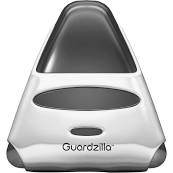
 Look familiar?  Well this device started showing up in all the big box retailers last year so we decided to give one a try.  Hooking the device up to a EVDO hotspot on Verizon was interesting at best.  During our testing we discovered that the device streams continuously back to Guardzilla (even if you don’t subscribe to their monitoring) all the time.  So this “security” device has some serious “privacy” issues.
[…]
Here’s the problem. Even when you don’t subscribe to the recording and playback features offered by Guardzilla the devices still stream to Guardzilla and we assume that the video is being stored otherwise why would you send it?  What tipped us off was the fact that the device uses nearly 1GB of bandwidth per day even when your not viewing the camera.  So basically your allowing Guardzilla to see into your protected space and to hear everything that goes on in this space because these devices are constantly streaming even when you are not using them. 
Read more on SLC Security.  In an update, they state that Guardzilla confirmed that that’s how the device operates.
I wonder what the FTC would say about all this.
[From the article:
The Guardzilla Privacy Policy:
Practecol takes reasonable efforts to ensure that your personal information is protected while you use the Services. [Not while you don’t?  Bob]
Oh and theres this line:
Also, video, audio, and other information received or recorded by your Guardzilla device may be stored on our servers or the servers of third parties.


Another surveillance technique?  (Beware of perverts/stalkers bearing gifts?)
Caleb Chen writes:
Over the weekend, the security community heard rumors about a potential issue with the NETGEAR Internet of Things wireless security camera.  A user reported to the privacy subreddit that after returning the device and not uninstalling the app or deleting an account, the user was still able to see camera footage from the new owner’s camera – a clear privacy breach.  The user accuses NETGEAR of having poorly planned out processes for change of ownership scenarios.  The reaction from the tech community lacked disbelief and sympathy.  Many others reported similar issues with brands other than NETGEAR.  In fact, there are websites that list all the world’s internet of things (IoT) cameras that are plugged in but not configured to keep the world out.
Read more on Privacy Online News.


“Hey!  We gotta do something!”  Don’t think, act! 
Invoking Orlando, Senate Republicans set up vote to expand FBI spying
U.S. Senate Majority Leader Mitch McConnell set up a vote late on Monday to expand the Federal Bureau of Investigation's authority to use a secretive surveillance order without a warrant to include email metadata and some browsing history information.
…   Privacy advocates denounced the effort, saying it seeks to exploit a mass shooting in order to expand the government’s digital spying powers.
…   The amendment would broaden the FBI’s authority to use so-called National Security Letters to include electronic communications transaction records such as time stamps of emails and the emails' senders and recipients.
The Obama administration for years has lobbied for a change to how NSLs can be used, after a 2008 legal memo from the Justice Department said the law limits them largely to phone billing records.  FBI Director James Comey has said the change essentially corrects a typo and is a top legislative priority for his agency.
…   The amendment filed Monday would also make permanent a provision of the USA Patriot Act that allows the intelligence community to conduct surveillance on “lone wolf” suspects who do not have confirmed ties to a foreign terrorist group.  That provision, which the Justice Department said last year had never been used, is currently set to expire in December 2019.

(Related)  “They’re not letting us do what we want to do!” (say it with a whiney voice)  Or perhaps, “They’re child pornographers, they don’t have any rights!” 
Tim Cushing writes:
Another court handling an FBI Playpen case has handed down its decision on a motion to suppress.  Like other courts fielding prosecutions resulting from this massive investigation, it has found [PDF] that the FBI’s NIT (Network Investigative Technique) is invasive enough to be called a “search.” (via FourthAmendment.com)
The FBI must have felt its NIT deployment would be considered a search.  That’s why it obtained a warrant in the first place.  But it’s been frantically peddling “not a search” theories as court after court has declared its warrant invalid because the searches were performed outside of the issuing magistrate’s jurisdiction.
Read more on TechDirt.


This will be handy when (if) I start teaching the “Care and Feeding of the Social Media Beast”
Paper – Social Clicks: What and Who Gets Read on Twitter?
by Sabrina I. Pacifici on
Maksym Gabielkov, Arthi Ramachandran, Augustin Chaintreau, Arnaud Legout.  Social Clicks: What and Who Gets Read on Twitter?.  ACM SIGMETRICS / IFIP Performance 2016, Jun 2016, Antibes Juan-les-Pins, France. 2016. https://hal.inria.fr/hal-01281190  Submitted on 13 Apr 2016.
“Online news domains increasingly rely on social media to drive traffic to their websites.  Yet we know surprisingly little about how a social media conversation mentioning an online article actually generates clicks.  Sharing behaviors, in contrast, have been fully or partially available and scrutinized over the years.  While this has led to multiple assumptions on the diffusion of information, each assumption was designed or validated while ignoring actual clicks.  We present a large scale, unbiased study of social clicks – that is also the first data of its kind – gathering a month of web visits to online resources that are located in 5 leading news domains and that are mentioned in the third largest social media by web referral (Twitter).  Our dataset amounts to 2.8 million shares, together responsible for 75 billion potential views on this social media, and 9.6 million actual clicks to 59,088 unique resources.  We design a reproducible methodology and carefully correct its biases.  As we prove, properties of clicks impact multiple aspects of information diffusion, all previously unknown.
(i) Secondary resources, that are not promoted through headlines and are responsible for the long tail of content popularity, generate more clicks both in absolute and relative terms.
(ii) Social media attention is actually long-lived, in contrast with temporal evolution estimated from shares or receptions.
(iii) The actual influence of an intermediary or a resource is poorly predicted by their share count, but we show how that prediction can be made more precise.”


At what point does Google cross the line into practicing medicine without a license?  Will these be linked to the nearest medical specialist along with a coupon that says, “Google sent me?”
Google Sharpens Search Results for ‘Skin Rash,’ ‘Tummy Ache’ and Other Symptoms
Google has a health problem. Its search results for medical symptoms aren’t very useful at best, and in many cases are alarmingly off base, frustrating patients and doctors alike.
The Alphabet Inc. -owned search giant says it has developed a cure.  On Monday, it rolled out a new feature called symptom search.
The next time you use the Google search app for iPhone and Android to look up something like “my tummy hurts,” “skin rash,” or “headache on one side,” you’ll see about a half-dozen digital cards you can swipe through right below the search box.  Each of these cards briefly describes a common health problem related to your search term.


Perspective.  Is this now a nation of crooks?
Google is being overloaded with DMCA takedown requests.  The company has seen the number of takedown notices from rightsholders quadruple over the past two years.  In 2016 alone, Google is projected to process over a billion reported pirate links, most of which will be scrubbed from its search index.
…   Google now handles around three million “pirate” links every day.


Perspective.  Also, some tips on how to do business in India?
Amazon's Bold Indian Strategy
Amazon CEO Jeff Bezos recently announced an expansion of the company's investment in India to the tune of US$3 billion -- that was in addition to the $2 billion in investments it announced in 2014.
…   "It appears that Amazon is seeking to build an infrastructure just for the India market, which is good strategy given the regulatory challenges of being a foreign entity and the different e-commerce environment," said Jim McGregor, principal analyst at Tirias Research.
…   One of the world's fastest-growing e-commerce markets, India currently is dominated by firms like Flipkart, Snapdeal and Alibaba.
"India represents a rapidly expanding market with a growing middle class," Stratecast/Frost & Sullivan Program Manager Mike Jude told the E-Commerce Times.
Overall, the online retail market in India is only 2 percent of total retail sales in that country, according to Forrester Research.  However, growth in e-tailing is exploding, with the market expected to rise at a compound annual growth rate of 44 percent, starting last year, to reach $75 billion by 2020.


It’s good to be on the New York Times bestseller list!
E-Book Buyers to Start Receiving Credits on Tuesday as Part of Apple Price Fixing Settlement
Starting on Tuesday, June 21, U.S. customers who purchased e-books from Apple and other retailers like Amazon and Barnes & Noble will begin receiving payouts from the $450 million settlement Apple agreed to pay after being found guilty of conspiring to fix the prices of e-books.
Customers will be receiving a $6.93 credit for each book that was a New York Times bestseller, and a $1.57 credit for other e-books.  Customers eligible for credits include those who purchased e-books between April 1, 2010 and May 21, 2012.


“If’n them thar good ole boys kin do it, I reckon us’ns can do it too!”
Chattanooga mayor: Gigabit speed internet helped revive city
When Chattanooga Mayor Andy Berke describes his city's economic renewal, he points to the city’s fiber network as a significant source of its new vibrancy.
…   A pioneer in municipal broadband, Chattanooga developed its fiber network in 2010 with $330 million, paid for with $105 million in federal funds and the rest from bonds.  The high-speed access led to direct and indirect economic gains and has been profitable.
…   “Our fiber goes to each and every home,” Berke said.  “We can’t have digital gated communities.  If we do that we and only allow fiber to go to some parts of the city, some parts of the state, we will see technology widen the gulf between people as opposed to bridging it.


This is all the Harvard B School could come up with?
The 8 Digital Productivity Tools Everyone Should Adopt
I’m a super adopter.  I love trying out hundreds of new applications, social networks and devices every year.  But not everybody wants to live the thousand-app lifestyle.  For most people, the goal is to adopt the smallest number of tools necessary to work efficiently.  That’s why my friends and colleagues often ask me which technologies I regard as must-haves: the tools and tactics that will make a big impact on their productivity without spending a lot of time or money getting up and running.